

Industrial Natural Gas Burners: Efficiency & Solutions
Jul 22,2026
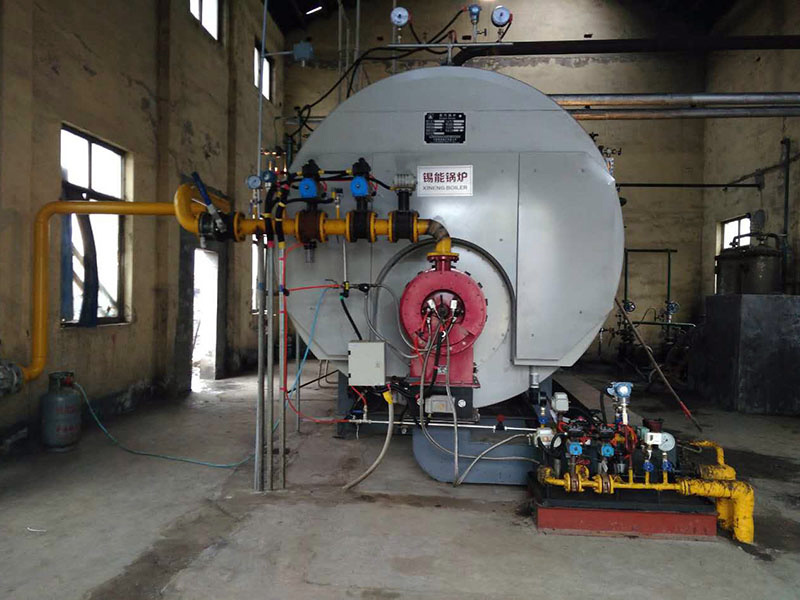
Understanding Industrial Natural Gas Burners
July 14, 2026 — Industrial energy managers are taking a closer look at burner performance as U.S. industrial natural gas demand is forecast to reach new highs. In a May 15, 2026 update, the U.S. Energy Information Administration said industrial natural gas consumption averaged a record 23.6 billion cubic feet per day in 2025 and is expected to rise again in 2026 and 2027, even as efficiency improvements continue to reduce fuel needed per unit of output.
The outlook is putting renewed attention on the natural gas burner, a core component in boilers, process heaters, furnaces, kilns, ovens, dryers, and other industrial heating solutions. For manufacturers, the discussion is no longer only about fuel availability. It is increasingly about combustion efficiency, emissions performance, uptime, controls, and whether existing natural gas heating equipment can meet production needs with less waste.
Why burner performance is in the spotlight
Industrial process heat remains one of manufacturing’s most energy-intensive needs. The Department of Energy describes process heat as thermal energy used to produce, treat, or alter manufactured goods, with applications ranging from food processing to refining, steelmaking, glass, and cement. DOE also notes that process heating systems must provide reliable energy, robust controls, and durable materials capable of withstanding demanding operating conditions for long periods.
That reliability is one reason natural gas heating remains common in industrial settings. A well-selected natural gas burner can deliver high heat input, fast response, and controllable flame characteristics for continuous or batch operations. But the same equipment can become a source of unnecessary fuel use if the burner is oversized, poorly tuned, cycling excessively, or operating with too much excess air.
EIA’s latest forecast points to a market where efficiency gains matter, but industrial activity may still push total gas use higher. The agency said its May Short-Term Energy Outlook projected average annual industrial natural gas consumption to increase by 1.2% in 2026 and 1.7% in 2027, with rising industrial activity more than offsetting efficiency improvements.
What an industrial natural gas burner does
At its simplest, a natural gas burner mixes fuel with combustion air and introduces that mixture into a combustion chamber to create controlled heat. DOE guidance for boiler systems states that the burner’s purpose is to mix fuel molecules with air molecules, and that a boiler’s performance is closely tied to how well the burner performs.
In industrial service, burner design varies by application. A boiler burner may be selected for steam generation and stable turndown. A furnace burner may prioritize flame shape, temperature uniformity, or heat transfer to a product. A dryer or oven burner may be integrated with airflow systems and safety interlocks. Despite these differences, the same core requirements apply:
Controlled fuel flow
Controlled combustion air
Reliable ignition and flame supervision
Stable flame over the required firing range
Safe shutdown in abnormal conditions
Efficient heat transfer to the process
Compliance with applicable emissions and operating rules
Power burners, common in many industrial boilers, mechanically mix fuel and combustion air before injection into the combustion chamber. DOE notes that power burners are designed to support complete combustion and flame stability across firing rates, while different burner models require different amounts of excess air and offer different turndown ratios.
Efficiency depends on air-to-fuel control
The current focus on industrial heating solutions is also a focus on controls. Too little combustion air can lead to unburned fuel and carbon monoxide. Too much combustion air sends extra heated flue gas up the stack, lowering overall efficiency. DOE’s boiler combustion guidance says well-designed natural gas-fired systems can achieve 10% excess air and recommends periodic flue gas monitoring and tuning to maintain optimum excess-air levels.
Modern burner systems often use linkage-less controls, oxygen trim, variable-speed fans, and digital monitoring to maintain a tighter air-to-fuel ratio over changing loads. DOE’s burner guidance says efficient burners provide the proper air-to-fuel mixture throughout the firing range without constant adjustment, and it identifies modern controls with independent fuel and air positioning as one way to improve consistency.
For facilities evaluating a natural gas burner upgrade, the operational signs are often straightforward: frequent cycling, unreliable ignition, high excess oxygen, rising stack temperatures, uneven process heat, repeated maintenance issues, or poor part-load performance. A burner replacement is not always the first step, but combustion testing, burner maintenance, and controls review can clarify whether the existing system is still fit for purpose.
Emissions rules are shaping equipment decisions
Emissions performance is another factor influencing natural gas heating decisions. EPA’s national standards for industrial, commercial, and institutional boilers and process heaters include requirements affecting major source categories, and EPA states that major source boilers and process heaters are subject to work practice standards for periodic tune-ups.
NOx rules can also affect burner selection, especially when facilities install new sources or replace burner assemblies. In one EPA-hosted state air pollution control standard, for example, a “burner assembly” is defined as a complete device that combines air or oxygen and fuel in a controlled manner and admits the mixture into a combustion chamber for safe and efficient combustion. The same standard requires low-NOx burners or equivalent technology for certain natural gas-fired boilers above 10 MMBtu/hr.
Because requirements vary by jurisdiction, permitting status, equipment type, fuel mix, and heat input, companies typically review burner projects with engineering, environmental, safety, and operations teams before procurement.
What buyers are watching in 2026
As demand rises, buyers of industrial heating solutions are looking beyond nameplate capacity. Key considerations include:
Turndown ratio: A wider firing range can reduce cycling and improve load matching.
Combustion efficiency: Lower stack losses and better air-to-fuel control can reduce operating costs.
Controls compatibility: Integration with plant automation, oxygen trim, and monitoring systems can improve visibility.
Emissions performance: Low-NOx and ultra-low-NOx options may be needed for permitting or internal targets.
Maintenance access: Burner heads, igniters, scanners, valves, and fans should be serviceable without excessive downtime.
Application fit: Boilers, furnaces, kilns, dryers, and ovens may need different flame geometry and control strategies.
The takeaway for manufacturers is that a natural gas burner is not a commodity part when it sits at the center of production. It is a performance-critical system that affects fuel use, emissions, safety, reliability, and product consistency. With industrial natural gas consumption forecast to remain elevated, facilities that depend on natural gas heating are likely to keep prioritizing burner tuning, controls upgrades, and right-sized replacement projects as part of broader energy management plans.
Related Posts

Contact Us
E-mail: yilin@cn-tsjsrs.com
Add: East side of Jingwu Road, Qian'an City, Hebei Province (within the modern equipment manufacturing industry cluster area)


Copyright © Tangshan Jinsha Combustion Heat Energy Co.,Ltd.