

Optimizing Industrial Burner Management Systems for Safety & Efficiency
Jul 22,2026
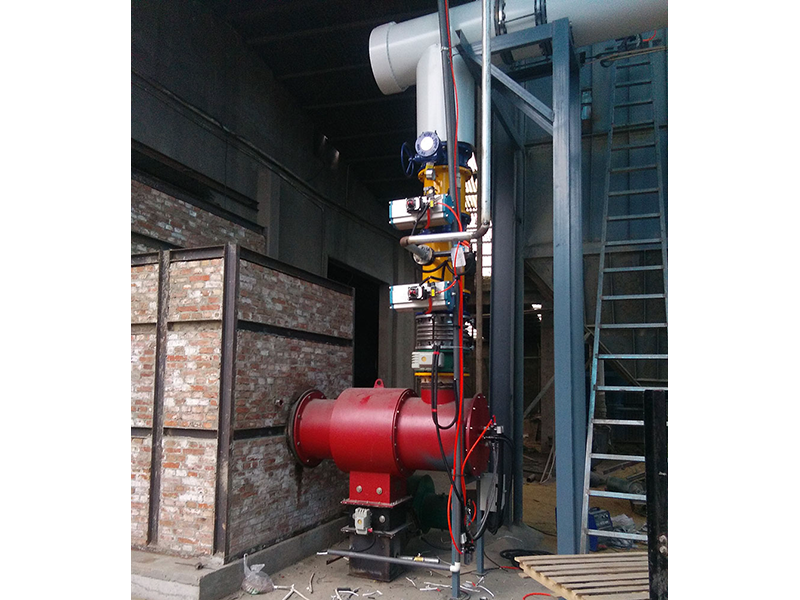
industrial burner management中systemsE
July 14, 2026 — Industrial operators are reassessing burner management and combustion controls as safety standards, emissions requirements, hydrogen-ready fuel strategies, and plant automation upgrades converge across thermal process industries.
The shift is visible in several recent developments: a 2025 interim amendment to NFPA 85, continuing NFPA 86 revision activity, new burner-control and flame-monitoring products, and supplier consolidation around combustion automation. Together, these moves point to a market in which burner management is no longer treated as a stand-alone safety panel, but as part of a broader risk, compliance, and performance strategy for industrial combustion systems.
Safety codes remain the anchor point
For plants operating boilers, furnaces, ovens, kilns, heaters, thermal oxidizers, or other fuel-fired assets, burner management systems continue to serve a core safety function: sequencing safe startup, proving purge, verifying permissives, supervising flame, and shutting fuel valves when unsafe conditions are detected.
That role is receiving renewed attention because code and standards activity continues to refine how combustion safeguards, programmable logic, valve proving, interlocks, and safety instrumented functions should be applied.
NFPA issued Tentative Interim Amendment 23-1 for the 2023 edition of NFPA 85, Boiler and Combustion Systems Hazards Code, with an issue date of August 20, 2025 and an effective date of September 9, 2025. The amendment revises language related to vent-line manifolding and valve-proving system leak detection references, underscoring the level of detail now expected in fuel-train and safety-system design.
NFPA 86 activity is also being closely watched by furnace and oven stakeholders. Public-input and committee materials for the next edition include discussion around the distinction between a combustion safeguard and a burner management system, the use of safety PLC-based logic, SIL 2-capable transmitters for certain safety functions, and requirements tied to airflow proving and safety shutoff valve arrangements. Those materials are not final code text, but they show where technical debate is focused as industrial equipment becomes more programmable and more integrated.
The International Fire Code also keeps industrial ovens and furnaces in view. Chapter 30 of the 2024 IFC addresses fuel supply, ventilation, emergency shutdown equipment, fire protection, operation, and maintenance for industrial ovens and furnaces, and directs those installations to applicable provisions including NFPA 86.
Functional safety expectations are moving into everyday burner projects
The line between traditional burner relay logic and formal functional safety is becoming more important for owners, engineers, and insurers.
ISA lists ANSI/ISA-61511-1-2018/IEC 61511-1 as defining requirements for the design, implementation, operation, and maintenance of safety instrumented systems in the process industry, including a lifecycle framework and safety integrity level targets. ISA also lists ISA-TR84.00.05-2009 as guidance for identifying safety instrumented functions in burner management systems.
IEC describes IEC 61511-1 as providing requirements for the specification, design, installation, operation, and maintenance of safety instrumented systems so they can achieve or maintain a safe process state.
For industrial combustion systems, that means burner management projects are increasingly evaluated not only by whether they can trip a fuel valve, but also by whether the design basis, testing interval, proof-test documentation, bypass management, alarm handling, and maintenance program can withstand audit scrutiny.
In practical terms, safety management systems are becoming more documentation-driven. Operators are expected to know which functions are safety critical, which are process-control functions, which devices are approved or listed for combustion safety service, and how any programmable logic is validated before startup.
Product launches signal demand for smarter burner controls
Recent supplier activity shows that OEMs and automation vendors are positioning burner management around integration, diagnostics, and emissions performance.
Cleaver-Brooks introduced the EOS 500 Burner Control System on February 10, 2025, describing it as a parallel positioning system with integrated flame safeguard capabilities. The company says the system supports independent channel management, UV and IR flame-sensing technology, proof-of-closure monitoring, valve proving, low-fire hold, Modbus TCP/IP communication, and integration with plant or building automation systems.
DURAG Group launched its Flame Supervisor on July 1, 2025, positioning the optical flame scanner for industrial furnaces, cement kilns, gas turbines, waste incineration plants, boilers, reformers, and other demanding combustion applications. The company highlights SIL 3 certification, dual-channel architecture, auto-learn commissioning, software-supported configuration, fiber-optic options, and compatibility across a broad range of fuels and burner types.
Honeywell’s combustion controls portfolio emphasizes fuel-to-air ratio optimization, flame stability, emissions reporting, safety compliance, retrofits, and integration of burner safety with broader process control. The company describes Safety Manager SC as a modular fault-tolerant system for Burner Management and Safety Instrumented System applications in process industries, while also positioning low-NOx burner replacement and advanced combustion optimization as emissions-reduction tools.
These releases and product-positioning updates reflect a common direction: combustion control systems are being sold less as isolated components and more as connected platforms for safer startup, better diagnostics, lower emissions, and easier data reporting.
Supplier consolidation adds momentum
The sector also saw notable merger and acquisition activity. CECO Environmental announced the closing of its acquisition of Profire Energy as of January 3, 2025, describing Profire as a provider of intelligent control solutions that enhance the efficiency, safety, and reliability of industrial combustion appliances while reducing potential environmental impacts.
Profire now presents itself as a CECO Environmental brand focused on burner management systems and combustion control systems, offering integrated solutions with technical support for safety, efficiency, and uptime.
The acquisition matters because it places burner management inside a broader environmental and industrial equipment portfolio. That is consistent with the larger trend: combustion safety, emissions compliance, energy efficiency, and digital monitoring are increasingly linked in capital planning.
Emissions pressure is reshaping combustion decisions
While burner management systems are first and foremost safety systems, the operating environment around burners is being shaped by emissions policy and reporting requirements.
EPA’s major-source boiler and process heater NESHAP page notes that all major-source boilers and process heaters are subject to a work-practice standard requiring periodic tune-ups. EPA also identifies final emission standards for pollutants including mercury, hydrogen chloride, particulate matter, and carbon monoxide for certain major-source boilers and process heaters.
Separately, EPA proposed tighter NOx limits for new stationary combustion turbines, stating that the proposed standards are based on combustion controls and selective catalytic reduction, and that the proposal would establish more protective NOx standards for affected new sources that fire or co-fire hydrogen.
Regional rules are also affecting thermal equipment decisions. South Coast AQMD’s Rule 1146.2, amended June 7, 2024, targets NOx reductions from large water heaters and small boilers and process heaters, and defines certified retrofit kits as including a burner and ancillary controls.
For plant teams, the takeaway is clear: low-NOx burners, oxygen trim, parallel positioning, fuel-air ratio control, flue-gas recirculation, SCR integration, and combustion data collection are now part of the same planning conversation as safe purge, ignition, flame supervision, and shutdown logic.
Hydrogen-readiness is widening the safety discussion
Hydrogen is another factor pushing burner management design into a more advanced phase.
The Clean Hydrogen Partnership reported in April 2026 that the HELIOS project had demonstrated 100% hydrogen startup and ramp-up in a high-pressure environment, achieved low NOx emissions at elevated firing temperatures, and developed an engineering framework for hydrogen-ready auxiliary systems. The update also noted work on hydrogen combustion modeling and flashback experiments.
Hydrogen is not a drop-in safety discussion for most existing fuel trains. It can introduce different flame characteristics, wider flammability considerations, higher flame speed, leakage concerns, and new detection or enclosure requirements depending on the equipment and jurisdiction. That is why revision activity, flame-detection technology, and safety instrumented design are all becoming more relevant as operators explore hydrogen blending, renewable fuels, and alternative-fuel co-firing.
For many facilities, the near-term action is not immediate conversion to hydrogen. It is a gap assessment: Can existing industrial combustion systems safely monitor flame across fuel changes? Are valves, vents, regulators, scanners, pressure switches, transmitters, and purge logic appropriate for the proposed fuel? Does the burner management system distinguish process optimization from safety shutdown? Are management-of-change procedures strong enough to document each modification?
BMS and CCS are becoming more tightly integrated — but they are not the same
One of the most important messages coming out of current industry discussion is that burner management systems and combustion control systems must work together without losing their separate purposes.
A BMS is concerned with safe sequencing and protective action. It validates permissives, supervises ignition and flame, confirms airflow and fuel conditions, manages trips, and initiates safe shutdown. A combustion control system, by contrast, regulates the combustion process to meet production, efficiency, temperature, pressure, oxygen, or emissions targets.
The distinction matters because control optimization should not compromise protective independence. A boiler may use advanced oxygen trim, parallel positioning, VFD air control, and digital tuning to improve efficiency, but the safety layer still needs properly defined interlocks, safety-rated components where required, tested shutdown paths, and documented bypass procedures.
Current product design is pushing these systems closer together. Touchscreen diagnostics, Ethernet communication, remote monitoring, and cloud-connected boiler platforms can help maintenance teams identify faults faster. However, integration also increases the need for cybersecurity review, access control, version management, and clear separation between safety logic and non-safety monitoring.
What plant operators are prioritizing now
Across refineries, chemical plants, food processing, pulp and paper, metals, cement, utilities, district energy, and manufacturing, the most urgent burner-management questions are practical rather than theoretical.
Operators are asking:
Which legacy flame safeguards, scanners, relays, valves, and actuators are approaching end of support?
Are purge, light-off, low-fire, and shutdown sequences documented and tested?
Do current industrial combustion systems meet the code edition adopted by the authority having jurisdiction?
Are proof-of-closure switches, valve-proving systems, airflow switches, pressure switches, and emergency stops functioning as intended?
Can combustion control systems support emissions goals without creating unstable operation?
Are BMS trips being recorded with enough detail to support root-cause analysis?
Are technicians trained to distinguish between nuisance trips, unsafe bypasses, and legitimate process deviations?
Does the facility have safety management systems that track inspection, test, maintenance, and change-control obligations?
The answers often determine whether a project becomes a panel replacement, a full burner retrofit, a fuel-train upgrade, a SIL verification effort, an emissions project, or a complete boiler-room modernization.
Modernization is being driven by uptime as much as compliance
Safety compliance is the primary driver, but uptime is a close second.
Older burner systems can suffer from hard-to-diagnose trips, obsolete components, limited fault history, drifting mechanical linkages, inconsistent fuel-air ratio control, and manual testing processes that consume maintenance time. Newer platforms often emphasize easier commissioning, clearer diagnostics, actuator precision, electronic fuel profiles, remote access, and communications with plant automation systems.
That does not mean every facility needs the newest controller. Many existing systems can remain serviceable with disciplined inspection, testing, calibration, documentation, and spare-parts planning. But as plants add emissions reporting, energy-efficiency goals, hydrogen studies, or broader automation upgrades, burner management becomes harder to leave untouched.
A common modernization path now includes:
Asset inventory — identifying every burner, fuel train, scanner, shutoff valve, actuator, pressure device, airflow device, controller, and interface.
Code and jurisdiction review — confirming which NFPA, IFC, insurance, local air-district, and internal standards apply.
Hazard review — documenting combustion hazards, ignition sources, failure modes, and required protective functions.
Safety function classification — separating BMS safety functions from process controls, alarms, and operator prompts.
Proof-test planning — defining test methods, intervals, responsibilities, and records.
Controls migration — replacing obsolete components while preserving safe startup and shutdown logic.
Commissioning and validation — proving purge, permissives, light-off, flame failure response, trip action, reset behavior, and data logging before production release.
Training and lifecycle management — ensuring operations, maintenance, engineering, and EHS teams understand the system after handover.
Data is becoming part of combustion safety
Data collection is changing the way burner systems are operated and maintained.
Digital controllers can capture first-out trips, flame signal trends, valve proving results, actuator position, oxygen readings, pressure deviations, temperature limits, and communication faults. When that information is available in a historian or maintenance system, teams can move from reactive troubleshooting to pattern recognition.
For example, repeated low-airflow permissive failures may indicate fan degradation, damper binding, blocked filters, instrumentation drift, or an overly narrow startup window. Repeated flame-signal instability may point to scanner sighting, grounding, burner tile condition, fuel quality, flame shape, or poor tuning. Repeated valve-proving faults may identify leaking valves before they become a larger hazard.
The value of this data depends on governance. Safety-critical data must be accurate, time-stamped, protected from unauthorized changes, and reviewed by people who understand combustion. A dashboard alone does not improve safety; it improves safety only when it drives inspection, maintenance, training, and management-of-change decisions.
The retrofit challenge: old equipment, new expectations
Many industrial facilities are trying to modernize equipment that was designed decades before today’s digital combustion controls, emissions reporting tools, and functional safety frameworks.
Retrofitting these systems can be complex. Existing burners may not have the mounting geometry for modern scanners. Fuel trains may lack adequate space for additional valves or proof-of-closure devices. Electrical panels may not meet current documentation or segregation expectations. Operators may rely on manual procedures that were never translated into validated logic.
The safest retrofit projects usually begin with the process, not the controller. Engineers first confirm how the furnace, boiler, oven, heater, or kiln should start, operate, shut down, purge, and recover after a trip. Only then should they select the hardware and software architecture.
In many cases, a staged approach is preferred. A plant may start by replacing obsolete flame scanners, then upgrade fuel-train safety devices, then add better diagnostics, and later implement more advanced combustion control. In other cases, especially where emissions permits or insurance findings are involved, a single outage window may be used for a comprehensive BMS and burner package replacement.
Training is becoming a risk-control measure
The complexity of modern burner management is also raising the importance of training.
Technicians need to understand not only wiring and PLC logic, but also combustion fundamentals, fuel trains, purge requirements, flame detection, trip causes, valve proving, and the limits of bypassing. Operators need to know what alarms mean, when to stop restart attempts, and how to escalate abnormal flame or fuel conditions. Engineers need to manage changes without weakening the protective design.
This is especially important where production pressure encourages quick resets. A nuisance trip may be frustrating, but repeated unexplained trips can be evidence of unsafe conditions, failing instrumentation, poor tuning, or a mismatch between the process and the safety logic.
For that reason, many organizations are tying burner management to broader safety management systems. Instead of treating BMS events as maintenance annoyances, they are being logged, trended, reviewed, and closed out like other process safety issues.
Outlook: integrated, audited, lower-emission systems
The direction of the market is now visible. Burner management systems are becoming more programmable, more connected, more thoroughly documented, and more closely tied to emissions performance.
The strongest growth areas are likely to include:
Legacy burner panel replacements
Safety PLC-based BMS projects
Flame scanner upgrades for difficult fuels and harsh environments
Valve proving and proof-of-closure retrofits
Low-NOx burner and control upgrades
Integration between BMS, combustion control systems, SIS platforms, and plant historians
Hydrogen-readiness studies and pilot projects
Compliance documentation and proof-test management
The challenge for owners is to avoid treating these projects as simple component swaps. A burner controller replacement can affect purge timing, startup permissives, shutdown action, alarm response, fuel-air ratio control, emissions stability, and operator behavior.
In 2026, the most successful industrial combustion projects are likely to be the ones that combine code compliance, functional safety discipline, practical maintenance access, emissions awareness, and operator usability. Burner management is still about preventing unsafe fuel and flame conditions — but the systems around it are becoming central to how plants manage risk, energy, uptime, and regulatory performance.
Related Posts

Contact Us
E-mail: yilin@cn-tsjsrs.com
Add: East side of Jingwu Road, Qian'an City, Hebei Province (within the modern equipment manufacturing industry cluster area)


Copyright © Tangshan Jinsha Combustion Heat Energy Co.,Ltd.