

Industrial Burners: Essential for Efficient Process Heating
Jul 26,2026
Understanding the Basics of Industrial Burners
Reliable Heat for Demanding Industrial Processes
The right industrial burner does more than generate heat. It supports production quality, fuel efficiency, operational safety, and long-term equipment performance. Whether your facility relies on ovens, furnaces, kilns, dryers, boilers, thermal oxidizers, or custom process equipment, a properly selected burner is essential to stable industrial heating.
Our industrial burner solutions are designed for facilities that need dependable process heating across a wide range of applications. From combustion performance to control compatibility, each system can be configured around your operating environment, fuel source, temperature requirements, and production goals.
If you are comparing burner options or trying to understand the basics before requesting a quote, this page explains what industrial burners do, how they work, and what to consider when choosing the right solution.
What Is an Industrial Burner?
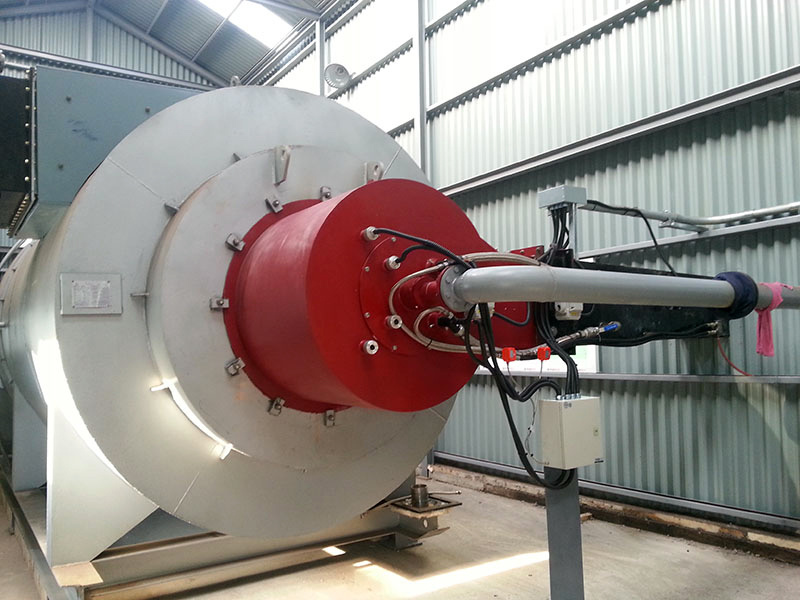
An industrial burner is a combustion device that mixes fuel and air to create a controlled flame or heat source for industrial heating applications. Unlike residential or light commercial burners, industrial burners are engineered for continuous operation, high heat output, demanding environments, and precise process control.
In a typical system, the burner works with supporting components such as:
Fuel trains
Air supply systems
Combustion blowers
Flame safety controls
Ignition systems
Control panels
Temperature sensors
Valves, regulators, and actuators
Together, these components help deliver consistent heat where it is needed, whether the goal is drying, curing, melting, baking, heat treating, steam generation, or emissions control.
Built for Process Heating Performance
Process heating requires more than simply reaching a target temperature. Many industrial operations depend on repeatable, uniform, and controllable heat to protect product quality and reduce waste. A well-matched industrial burner helps maintain the thermal conditions your process needs while supporting reliable uptime.
Our burner solutions can be applied across a variety of process heating environments, including:
Industrial ovens and dryers
Furnaces and kilns
Boilers and water heaters
Air heaters
Thermal fluid systems
Heat-treating equipment
Food processing systems
Coating, curing, and finishing lines
Aggregate, ceramic, and metal processing equipment
Environmental and waste treatment systems
Because every application is different, burner selection should account for temperature range, chamber design, airflow, fuel availability, emissions requirements, turndown needs, and control strategy.
Key Features and Advantages
A quality industrial burner should help your operation run safely, efficiently, and consistently. Available configurations may include features such as:
Flexible fuel options: Systems can be configured for common industrial fuels, depending on application requirements and availability.
Stable combustion: Proper air-fuel mixing helps support consistent flame quality and reliable heat delivery.
Process control compatibility: Burner systems can integrate with existing controls or be paired with dedicated combustion control packages.
Application-specific configurations: Burner design can be matched to direct-fired, indirect-fired, high-temperature, or specialty process needs.
Efficient heat transfer: Selecting the right burner supports better fuel use and improved thermal performance.
Durable construction: Industrial-grade materials and components help withstand demanding operating conditions.
Safety-focused design: Flame supervision, ignition controls, and safety interlocks can be incorporated to support safe operation.
Scalable output: Burner capacity can be selected according to equipment size, process load, and production demand.
Why Burner Selection Matters
Choosing an industrial burner based only on capacity can lead to performance problems. Oversized burners may cycle excessively or operate inefficiently. Undersized burners may struggle to meet process demand. A burner that is not suited to the chamber, airflow, or fuel system can also create uneven heating, poor combustion, higher maintenance needs, or product inconsistency.
The right solution can help your facility:
Improve temperature uniformity
Reduce fuel waste
Support stable production cycles
Minimize unplanned downtime
Improve startup and response times
Maintain product quality
Support compliance with applicable safety and emissions requirements
Extend the service life of related heating equipment
For this reason, we recommend evaluating the entire industrial heating system, not just the burner itself.
Common Industrial Burner Types
Industrial burners are available in several styles, and the best option depends on the application. Common categories include:
Direct-Fired Burners
Direct-fired burners release heat directly into the process air or chamber. They are often used in drying, curing, baking, and air heating applications where direct contact with combustion products is acceptable for the process.
Indirect-Fired Burners
Indirect-fired systems transfer heat through a heat exchanger or separate chamber, keeping combustion gases apart from the process stream. This approach is useful when product purity, air quality, or process conditions require separation.
High-Velocity Burners
High-velocity burners deliver combustion gases at higher speeds to improve circulation and temperature uniformity inside furnaces, kilns, or heat treatment chambers.
Low-NOx Burners
Low-NOx burner designs are engineered to help reduce nitrogen oxide formation during combustion. These may be considered for facilities with emissions targets or regulatory requirements.
Custom Burner Systems
Some applications require specialized burner geometry, controls, fuel handling, mounting, or materials. Custom configurations can be developed for unique process heating equipment or retrofit projects.
Industrial Burner Specifications to Consider
Because specifications vary by application, it is important to define operating requirements before choosing a burner. Important factors may include:
Required heat output or capacity range
Fuel type and available fuel pressure
Combustion air requirements
Desired turndown ratio
Operating temperature range
Burner mounting orientation
Chamber size and geometry
Process airflow and pressure conditions
Control system compatibility
Ignition method
Flame supervision requirements
Emissions considerations
Installation environment
Maintenance access
If you are replacing an existing industrial burner, details such as current burner model, equipment drawings, process temperatures, fuel usage, and performance concerns can help guide the recommendation.
Pricing and Quote Options
Industrial burner pricing depends on the burner type, capacity, fuel configuration, controls, materials, safety components, and any customization required. Because each process heating application has different operating demands, we provide quote-based pricing rather than one-size-fits-all pricing.
A custom quote can help ensure you receive the right configuration for your equipment, production requirements, and budget. To speed up the quoting process, be ready to share:
Application type
Fuel source
Target temperature
Existing equipment details
Required heat output, if known
Available utilities
Space or mounting limitations
Control requirements
Any emissions or safety requirements
Designed for New Systems and Retrofits
Our industrial burner solutions can support both new equipment builds and retrofit projects. For new systems, burner selection can be coordinated early in the design process to support performance, efficiency, and maintenance access.
For retrofits, the goal is often to improve reliability, replace obsolete equipment, increase efficiency, solve uneven heating issues, or adapt to new production requirements. A properly planned retrofit can help extend the value of existing industrial heating equipment while improving day-to-day operation.
Support From Selection to Startup
Selecting an industrial burner can be technical, but the process does not have to be difficult. Our team can help review your process requirements and identify a solution that fits your application. Depending on project needs, support may include burner selection, system configuration, control recommendations, retrofit planning, and startup guidance.
We focus on practical performance: safe combustion, dependable heat, efficient operation, and serviceable design.
Frequently Asked Questions
What does an industrial burner do?
An industrial burner creates controlled heat by mixing fuel and air for combustion. It is used in industrial heating and process heating equipment such as ovens, furnaces, dryers, kilns, and boilers.
How do I choose the right industrial burner?
Start with your application, fuel type, temperature range, heat output needs, chamber design, control requirements, and safety considerations. A burner specialist can help match the burner to your process rather than relying on capacity alone.
Can an industrial burner improve efficiency?
Yes, the right burner configuration can help improve combustion stability, heat transfer, and fuel use. Actual efficiency gains depend on the full system design, operating conditions, and maintenance practices.
Do you offer custom industrial burner solutions?
Yes. Burner systems can be configured for many process heating applications, including new installations, equipment upgrades, and retrofit projects.
Request a Custom Industrial Burner Quote
Get dependable heat for your process with an industrial burner selected around your real operating needs. Share your application details with our team, and we will help you identify the best configuration for your equipment, fuel source, and production goals.
Contact us today to discuss your industrial heating requirements and request a custom quote.
PREVIOUS:
Related Posts

Contact Us
E-mail: yilin@cn-tsjsrs.com
Add: East side of Jingwu Road, Qian'an City, Hebei Province (within the modern equipment manufacturing industry cluster area)


Copyright © Tangshan Jinsha Combustion Heat Energy Co.,Ltd.